Learn how research workflows can plan searches, compare sources, verify claims, and assemble reports with human review.
In April 2026, typing a single prompt into a chat window is only one way to use AI for research. More advanced workflows use agentic systems to search, verify, and draft reports through multiple steps.
🏗️ From prompts to systems: agentic workflows
A common pattern is to move from a one-shot answer to an iterative workflow. Instead of asking AI to write a report immediately, a system can use a graph that includes:
- Planning: An agent breaks a complex question into smaller research tasks.
- Execution: Specialized agents search databases and the web.
- Verification: A reviewer checks claims, looks for contradictions, and requires citations before the next step.
🔌 MCP and A2A: connecting tools and agents
Agents can use defined interfaces to work with external services.
- Model Context Protocol (MCP): MCP provides a standard way for AI applications to connect to tools and data sources. Each connection still requires configuration and appropriate permissions.
- Agent-to-Agent (A2A): A primary agent can delegate subtasks to specialized agents. For example, a research planner can ask a visual analysis agent to inspect a chart and return structured data.
🛡️ Cross-model review and confidence scores
Using multiple models can help surface disagreements, but it does not eliminate hallucinations.
- Confidence scoring: A system can attach a confidence estimate to each claim. Treat the score as a signal for review, not proof that the claim is correct.
- Cross-model checks: One model can draft or gather evidence while another checks reasoning and citations. When they disagree, return to the sources and investigate instead of assuming that repeated agreement guarantees truth.
🕸️ LangGraph: visual orchestration
Tools such as LangGraph can help build stateful workflows that:
- Recover from errors: If an agent receives a 404 response or inconsistent data, the workflow can retry or change its search strategy.
- Support correction loops: A workflow can ask an agent to revise its query or output, then validate the result against explicit criteria. Human review remains valuable for high-impact work.
🚀 A research strategy: architect, not typist
A valuable skill is designing the research workflow: define the question, trusted sources, evidence requirements, and review steps. The goal is not to remove judgment, but to make research faster and easier to audit.
🚀 2026 pro tip: detect overconfident answers Flag claims that sound certain when reliable sources disagree or evidence is limited. Ask the system to state uncertainty and show supporting sources. Skepticism and independent verification are essential to good research.
Advanced Digital Security and Server Hardening
Learn layered ways to protect your digital identity with passkeys, hardware security keys, WireGuard, and server hardening.

PowerShell Commands to Fix Windows 11: Complete Guide
Use PowerShell to diagnose and repair Windows, network, storage, update, and system file issues with tools such as winget, DISM, and SFC.

Emergency SOS: Apps and Phone Settings
Prepare your phone for emergencies with built-in safety features, first-aid references, location sharing, and support services.

Where Is the Money Going? A Complete Guide to Payment Card Security
Find the source of unrecognized card charges, secure your accounts, and learn what to ask your bank about subscriptions, phishing, wallets, and card controls.

200 Digital Tips Everyone Should Know in 2026
Practical tips for Android, iPhone, Windows, Chrome, Google, photos, PDFs, Gmail, cloud storage, and privacy, with clear steps and limitations.
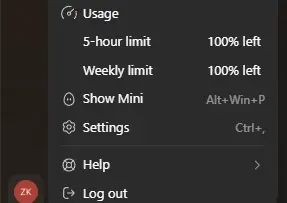
My ChatGPT Subscription Expired and My Codex Limits Reset
My subscription renewal failed on the 23rd. After it expired and I renewed, the Codex Usage page showed 100% remaining. Here is what I observed and why it is not a guaranteed trick.
Share your thoughts, questions, or tips about this article.